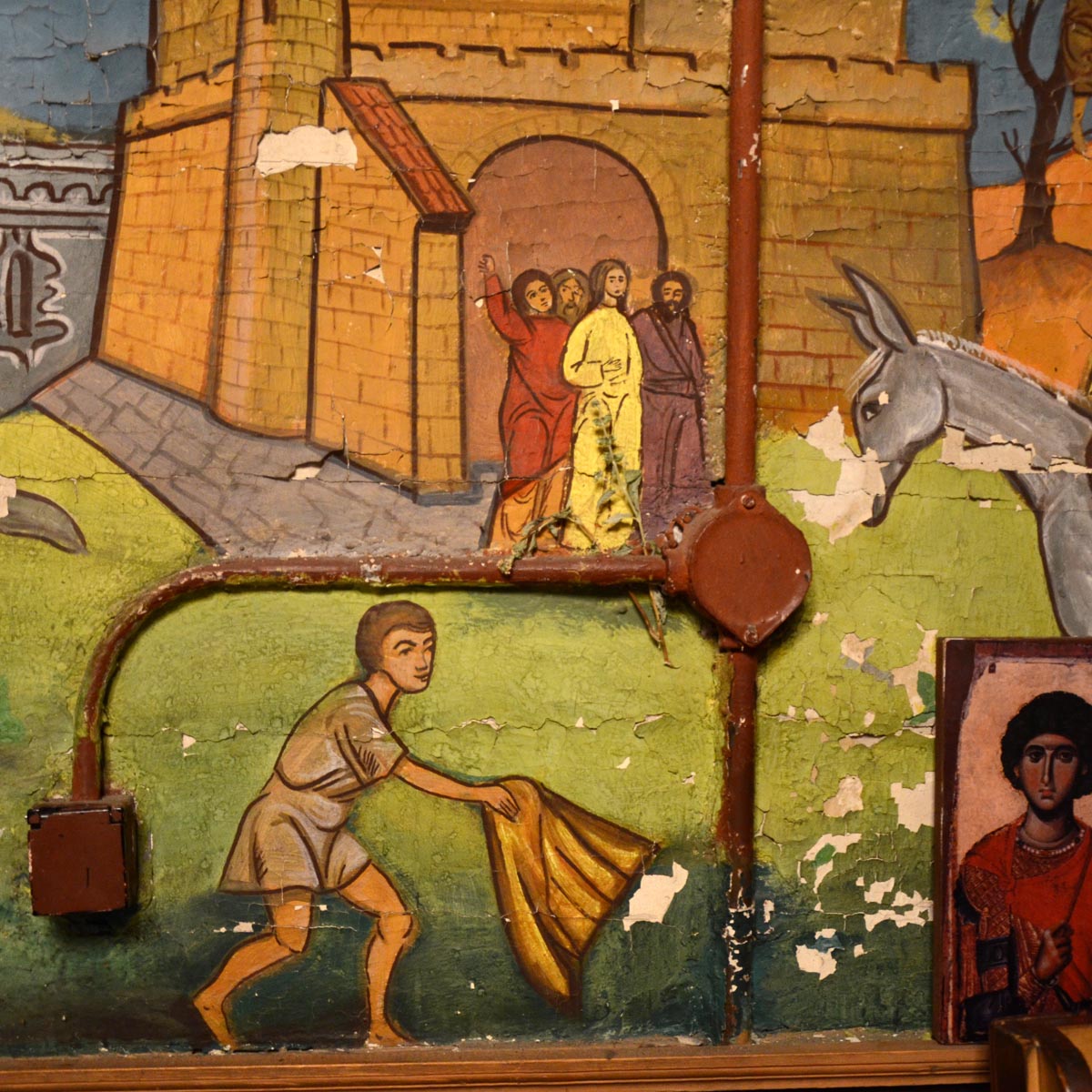
The museum in Makrinitsa (Pelion, Thessaly/Greece) is a place where religious art, piety and folk tradition meet, waiting for you to explore an invaluable treasure.
Balcony of Pelion
Mountain Pelion, homeland of Chiron the Centaur, tutor of many mythological figures and ancient Greek heroes, such as Jason, Achilles, Theseus and Heracles, at the southeastern part of Thessaly in northern Greece, forms a hook-like peninsula between the Pagasetic Gulf and the Aegean Sea.
One of the most beautiful villages of the mountain, the so-called “Balcony of Pelion”, the village of Makrinitsa was founded in the beginning of the 13th c. in the area of the Byzantine Monastery of Mother of God, called the Oxeia Episkepsis.
Makrinitsa saw a significant growth during the late ottoman period (18th-19th c.) through the advancement of trade and craftsmanship. The village’s influence is reflected up until today in the wealth of its monuments and relics, all of which are true masterpieces of Pelion’s folk art, both secular and religious.
The Museum
The Museum is housed in a contemporary two-storey building, following the characteristics of traditional Pelion area architecture in the central square of the village. The collections include an astounding amount of holy treasures from churches and chapels located in the area of Makrinitsa.
More specifically, a significant collection of holy icons, representative of the various artistic features of post-byzantine painting, is on display along with painted “proskynetaria” from the Holy Land (tokens of remembrance from pious pilgrims in Jerusalem), parts of wood carved temples and altar gates influenced by the art of Epirus, valuable liturgical utensils, silver plated icons, elaborate silver binded Gospels, sumptuous priests’ vestments, embroidered Epitaphs, and banners coming from Russian textile workshops, liturgical books’ incunabula some decorated with illuminations.
All of these works of art cover a long period that extend from the Byzantine era up until our time.
Marble Relief Icon
The Museum’s most prominent exhibit is the marble relief icon of the Mother of God, the Oxeia Episkepsis, presenting the praying Virgin with raised hands that is an excellent work of Byzantine sculpture (13th). Among the most distinguished rather contemporary exhibits one can find three icons painted by the renowned folk painter Theophilos Chatzimichail (1871-1934).
– Maria Nanou, MSc Theology, Director of the Department of Research, Management and Conservation of Byzantine Monuments and Relics, Volos Academy for Theological Studies
More
For more information and research possibilities, go here.
Article reposted from www.resilience-ri.eu